


TP316L Seamless Stainless Steel Tube
What Is a Seamless Stainless Steel TP316L Tube?
Seamless TP316L (UNS S31603 / W.Nr. 1.4404) tube is the low-carbon version of the molybdenum-bearing 316 grade. By limiting carbon to 0.030% maximum it prevents chromium carbide precipitation during welding, so the molybdenum-rich corrosion resistance of the 316 family is preserved in the heat-affected zone as well as in the parent metal.
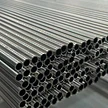
TP316L Stainless Steel Seamless Tube(UNS S31603) is an extra-low carbon, molybdenum-alloyed austenitic stainless steel tubing engineered for high-purity, high-pressure, and corrosion-critical applications.
Produced from a solid billet via seamless extrusion, these tubes deliver a uniform metallurgical structure, eliminating weld seam defects and ensuring consistent mechanical performance and superior structural integrity along the entire length.
The defining characteristic of Grade 316L is its maximum carbon content of 0.03%, which effectively prevents sensitization—the precipitation of chromium carbides at grain boundaries during welding. This ensures that the heat-affected zone (HAZ) maintains the same corrosion resistance as the base metal, eliminating the need for post-weld solution annealing in most applications.
TP316L Key Features and Technical Advantages
The ultra-low carbon composition minimizes the risk of intergranular corrosion (IGC), commonly referred to as “weld decay,” making TP316L the preferred choice for welded systems.
With 2.0% – 3.0% molybdenum (Mo), TP316L offers excellent resistance to chloride-induced corrosion, outperforming TP304/304L in marine and chemical environments.
The absence of longitudinal weld seams ensures uniform wall thickness, improved fatigue resistance, and higher allowable stress values under pressure service conditions.
| Feature | Description |
|---|---|
| Exceptional Post-Weld Corrosion Resistance | The ultra-low carbon composition minimizes the risk of intergranular corrosion (IGC), commonly referred to as “weld decay,” making TP316L the preferred choice for welded systems. |
| Superior Resistance to Pitting and Crevice Corrosion | With 2.0% – 3.0% molybdenum (Mo), TP316L offers excellent resistance to chloride-induced corrosion, outperforming TP304/304L in marine and chemical environments. |
| High-Precision Seamless Construction | The absence of longitudinal weld seams ensures uniform wall thickness, improved fatigue resistance, and higher allowable stress values under pressure service conditions. |
| Excellent Formability and Fabrication | High ductility allows for bending, flaring, and complex fabrication, while maintaining structural integrity and corrosion resistance. |
| Hygienic Surface and Cleanability | Smooth, non-porous internal surfaces meet sanitary and high-purity requirements, compliant with ASME BPE standards for pharmaceutical and food-grade systems. |
TP316L Product Specifications and Data
To provide a comprehensive overview of this versatile material, here are the detailed technical specifications and performance data for 316L stainless steel.
The key difference in 316L's composition is its significantly lower carbon content (max 0.03%), while retaining the essential molybdenum for superior corrosion resistance.
Table 1: Chemical Composition of 316L Stainless Steel
| Cr | Ni | Mo | P | S | Mn | Si | C |
|---|---|---|---|---|---|---|---|
| 16.00−18.00 | 10.00−14.00 | 2.00−3.00 | ≤0.045 | ≤0.03 | ≤2.00 | ≤1.00 | ≤0.035 |
Grade 316L offers a good balance of strength and ductility, with a slightly lower tensile and yield strength compared to 316 due to its lower carbon content, but still robust for most demanding applications.
Table 2: Typical Mechanical Properties of 316L Stainless Steel
| Tensile Strength | Yield Strength | Elongation | Rockwell Hardness | Brinell Hardness |
|---|---|---|---|---|
| 485−690 MPa | ≥170 MPa | ≥ 35% | ≤90 HRB | ≤192 HB |
These physical properties are largely similar to 316, indicating consistent thermal and electrical behavior.
Table 3: Typical Physical Properties of 316L Stainless Steel
| Density | Melting Point | Thermal Expansion | Thermal Conductivity | Modulus of Elasticity | Electrical Resistivity |
|---|---|---|---|---|---|
| 8.0 g/cm3 | 1370−1400 ∘C | 16.5 μm/m⋅∘C (20−100∘C) | 16.3 W/m⋅K (100∘C) | 193 GPa | 7.4×10⁻⁷ Ω⋅m (20∘C) |
TP316L Dimensional Standards and Tolerances
TP316L seamless tubes are supplied to the dimensional tolerances of ASTM A213 / A213M, ASTM A269 and ASTM A312, with inspection per ASTM A1016 / A1016M.
Table 4: The Standard of Stainless Steel Seamless Tube Size Tolerance Size Chart :
| Standard | OD(D) | Tolerance(MM) | Thickness(S) | Tolerance(MM) | Length | Tolerance | |
|---|---|---|---|---|---|---|---|
| MM | Common | High | MM | MM | |||
| EN 10216-5 HFD | 30≤D≤219.1(D2) | ±1.0% or ±0.5mm, whicever is the greater | T1, T≤4 | ±15% or ±0.6mm, whicever is the greater | L≤6M | +5/0 | |
| T2 | ±12.5% or ±0.4mm, whicever is the greater | ||||||
| 219.1≤D≤610 (D1) | ±1.5% or ±0.75mm, whicever is the greater | T≤0.05D | +22.5%/-15% | 6≤12 | +10/0 | ||
| T1, 0.05D≤0.09D | ±15% or ±0.6mm, whicever is the greater | ||||||
| T2, T>0.09D | ±12.5% or ±0.4mm, whicever is the greater | L>12 | +by agreement/0 | ||||
| EN 10216-5 CFD | D3(D≤219.1) | ±0.75% or ±0.3mm, whicever is the greater | T3 | ±10% or ±0.2mm, whicever is the greater | |||
| D4(D≤219.1) | ±0.5% or ±0.mm, whicever is the greater | T4 | ±7.5% or ±0.15mm, whicever is the greater | ||||
| ASTM A213 HFD | D≤100 | +0.4/-0.8 | D<100,S≤2.4 | +40%/0 | HFD, all size | +5.0/0 | |
| +0.4/-1.2 | D<100,2.4≤3.8 | +35%/0 | |||||
| +0.4/-1.6 | D<100,3.8≤4.6 | +33%/0 | |||||
| D<100,S>4.6 | +28%/0 | ||||||
| 100≤200 | +0.4/-1.2 | D>100, 2.4≤3.8 | +35%/0 | ||||
| 200≤225 | +0.4/-1.6 | D>100,3.8≤4.6 | +33%/0 | ||||
| D>100,S>4.6 | +28%/0 | ||||||
| ASTM A213 CFD | D<25 | ±0.10 | D≤38.1 | +20%/0 | CFD, D<50.8 | +3.0/0 | |
| 25≤D≤40 | ±0.15 | ||||||
| 40 | ±0.20 | ||||||
| 50≤D<65 | ±0.25 | ||||||
| 65≤D<75 | ±0.30 | D>38.1 | +22%/0 | CFD, D≥50.8 | +5.0/0 | ||
| 75≤D≤100 | ±0.38 | ||||||
| 100≤200 | +0.38/-0.64 | ||||||
| 200≤225 | +0.38/-1.14 | ||||||
| ASTM A269 | D≤13 | ±0.13 | D≤13 | ±15% | D<38 | +3.2/0 | |
| 13 | ±0.13 | 13 | ±10% | ||||
| 38≤D<89 | ±0.25 | D>38 | +4.8/0 | ||||
| 89≤D<140 | ±0.38 | ||||||
| 140≤D<203 | ±0.76 | ||||||
| 203≤D<305 | ±1.01 | ||||||
| 305≤D<356 | ±1.26 | ||||||
| ASTM A270 | D<25 | ±0.13 | For weld pipe all size | ±12.5% | +3.0/0 | ||
| 25-50 | ±0.20 | ||||||
| 50-75 | ±0.25 | ||||||
| 75-100 | ±0.38 | For CD SMLS pipe D≤38.1 | +20%/0 | ||||
| 100-140 | ±0.38 | +5.0/0 | |||||
| 140-200 | ±0.75 | For CD SMLS pipe D>38.1 | +22%/0 | ||||
| 200-300 | ±1.25 | ||||||
TP316L Common Industrial Applications
| Industry | Typical Applications |
|---|---|
| Pharmaceutical and Biotechnology |
|
| Chemical and Petrochemical |
|
| Offshore, Oil and Gas |
|
| Heat Exchangers, Precision and Transport |
|
TP316L Quality Assurance and Production Process
| Process Step | Description |
|---|---|
| Certification and Documentation | All TP316L tubes are supplied to ASTM A213 / A269 / A312 with EN 10204 3.1 mill test certificates. NACE MR0175 / ISO 15156 compliance, PMI reports and full heat-number traceability are available on request. |
| Non-Destructive Testing (NDT) | Hydrostatic or eddy-current testing is performed on 100% of tubes. Ultrasonic testing and dye-penetrant inspection can be supplied for critical service, with records retained for each production lot. |
| Metallurgical Verification | Low-carbon chemistry, ferrite content and microstructure are verified per heat. Intergranular corrosion testing per ASTM A262 Practice E is available for post-weld and sensitisation-critical applications. |
| Mechanical Testing | Tensile, yield, elongation and hardness tests are carried out per heat. Impact and flattening tests can be supplied for low-temperature and pressure-critical service. |
TP316L vs TP316 / TP304L – Technical Comparison
TP316L and TP316 are the same molybdenum-bearing austenitic grade, separated only by carbon content and the welding behaviour that follows from it. TP304L is the molybdenum-free low-carbon counterpart.
Chemical Composition
- Carbon: TP316L ≤ 0.030 % vs TP316 ≤ 0.080 %
- Molybdenum: TP316L 2.00–3.00 %, TP316 2.00–3.00 %, TP304L none
- Nickel: TP316L 10.0–14.0 %, TP316 10.0–14.0 %, TP304L 8.0–12.0 %
- Chromium: TP316L 16.0–18.0 %, TP304L 18.0–20.0 %
Corrosion Performance
- PREN: TP316L ≈ 24–26 vs TP304L ≈ 18–19
- TP316L preserves pitting and crevice corrosion resistance in the heat-affected zone after welding
- TP304L resists intergranular corrosion after welding but remains limited in chlorides
- Neither grade is immune to chloride stress corrosion cracking
Mechanical Properties
- Tensile strength: TP316L ≥ 485 MPa, TP316 ≥ 515 MPa, TP304L ≥ 485 MPa
- Yield strength (0.2 %): TP316L ≥ 170 MPa, TP316 ≥ 205 MPa
- Elongation: all grades ≥ 35 %
- TP316 and TP304 offer higher annealed strength than their L variants
Selection Guidance
- Choose TP316L for welded chloride-bearing service that cannot be post-weld annealed — the default choice for process tubing
- Choose TP316 where maximum annealed strength is required and welding is light or followed by annealing
- Choose TP304L only in molybdenum-free, mildly corrosive duty
Frequently Asked Questions About TP316L Seamless Stainless Steel Tubes
What is TP316L stainless steel tube?
TP316L (UNS S31603 / W.Nr. 1.4404) is the low-carbon version of the molybdenum-bearing 316 grade, containing 2.00–3.00 % molybdenum and a maximum of 0.030 % carbon. It provides the same chloride and reducing-acid resistance as TP316 while resisting intergranular corrosion in the heat-affected zone after welding.
What is the difference between TP316 and TP316L?
The only significant difference is carbon content: 0.030 % maximum for TP316L against 0.080 % for TP316. That makes TP316L the preferred grade for welded assemblies and heavy sections that will not be post-weld annealed. TP316 retains higher annealed yield strength at 205 MPa against 170 MPa for TP316L.
Is TP316L better than TP304L?
For chloride-bearing, reducing-acid or marine service, yes — the 2.00–3.00 % molybdenum raises the pitting resistance equivalent number from roughly 18–19 to 24–26. For mildly corrosive, oxidising or food-grade service where molybdenum is not required, TP304L is equally suitable and more economical.
Which standards cover TP316L seamless tubes?
TP316L seamless tubing is normally supplied to ASTM A213 / A213M, ASTM A269 and ASTM A312, with dimensional inspection per ASTM A1016 / A1016M. Equivalent European specifications include EN 10216-5 grade 1.4404.
Request a TP316L Tube Quotation
Send your TP316L tube enquiry with application, medium, size (OD and wall thickness or schedule), quantity, length, end finish and inspection requirements.
TP316L Related Grades and Product Forms
Other grades in the Xinzhe seamless range, and the same alloy in alternative product forms:
- TP316L Seamless Stainless Steel Pipe — UNS S31603 / W-Nr 1.4404
- TP316 Seamless Stainless Steel Tube — UNS S31600 / W-Nr 1.4401
- TP316Ti Seamless Stainless Steel Tube — UNS S31635 / W-Nr 1.4571
- TP316LN Seamless Stainless Steel Tube — UNS S31653 / W-Nr 1.4429
- TP317L Seamless Stainless Steel Tube — UNS S31703 / W-Nr 1.4438
- TP317 Seamless Stainless Steel Tube — UNS S31700 / W-Nr 1.4449
- TP314 Seamless Stainless Steel Tube — UNS S31400 / W-Nr 1.4841
- TP321 Seamless Stainless Steel Tube — UNS S32100 / W-Nr 1.4541
- TP321H Seamless Stainless Steel Tube — UNS S32109 / W-Nr 1.4878
- TP310H Seamless Stainless Steel Tube — UNS S31009 / W-Nr 1.4845
Product ranges:Seamless Stainless Steel Pipes·Stainless Steel Tubes
 TP304 Seamless Stainless Steel Tube
 TP310MoLN Seamless Stainless Steel Pipe
 TP316 Seamless Stainless Steel Tube
 TP316Ti Seamless Stainless Steel Tube
 TP310 Seamless Stainless Steel Tube
 TP309 Seamless Stainless Steel Tube
 TP304L Seamless Stainless Steel Tube
 TP316L Seamless Stainless Steel Tube
 TP310S Seamless Stainless Steel Tube
 TP310H Seamless Stainless Steel Tube
 TP314 Seamless Stainless Steel Tube
 TP316LN Seamless Stainless Steel Tube
 TP317 Seamless Stainless Steel Tube
 TP317L Seamless Stainless Steel Tube
 TP347H Seamless Stainless Steel Tube
 TP347 Seamless Stainless Steel Tube
 TP321H Seamless Stainless Steel Tube
 TP321 Seamless Stainless Steel Tube
 TP904L Seamless Stainless Steel Tube
 Alloy 31 Seamless Tube