


UNS S31400|1.4841|TP314 Seamless Stainless Steel Tube
We leverage decades of metallurgical expertise to provide export-grade seamless pipes in a wide range of schedules and customizable dimensions tailored to project-specific requirements. Backed by full traceability (MTRs) and international certifications, XinZhe ensures the reliability of every order through stringent Non-Destructive Testing (NDT), including Ultrasonic and Eddy Current inspections. Request a quote today to benefit from our factory-direct pricing and comprehensive technical support on premium TP314 stainless steel solutions.
"While TP310S is highly resistant to oxidation, TP314 provides superior scale adhesion and resistance to carburization due to its higher silicon content, making it the preferred choice for fluctuating thermal cycles."
What Is a Seamless Stainless Steel TP314 Tube?
TP314 (UNS S31400) is a high-chromium, high-nickel austenitic stainless steel tube with an elevated silicon content. The silicon addition is what sets TP314 apart: it forms a tenacious, tightly adherent oxide scale that resists spalling at temperatures up to about 1,100 °C, making the grade a first choice for radiant tubes, furnace furniture and other components exposed to cyclic high-temperature oxidation.
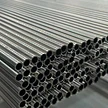
TP314 Seamless Stainless Steel tube is a high-temperature, corrosion-resistant tube crafted from a single, solid billet of a high-chromium and high-nickel austenitic stainless steel. It's manufactured without a weld joint, ensuring superior structural integrity and reliability, especially under high-stress, high-temperature, and corrosive conditions. The"314"designation refers to a specific grade known for its exceptional oxidation resistance and high-temperature strength. Its unique composition, which includes a high percentage of silicon, provides outstanding resistance to oxidation and scaling, making it a preferred choice for applications in the most demanding high-temperature environments.
Key Features and Technical Advantages
Exceptional High-Temperature Oxidation Resistance
The elevated silicon content forms a dense, adherent oxide scale that resists spalling under thermal cycling, giving TP314 reliable service in air up to about 1,100 °C.
Excellent Creep-Rupture Strength
TP314 maintains high tensile and creep-rupture strength at elevated temperature, allowing thinner walls and longer service life in radiant and furnace applications.
Resistance to Carburization
The alloy is highly resistant to carburization, an essential property for petrochemical cracking furnaces and other carbon-rich high-temperature atmospheres.
High Pressure and Temperature Tolerance
Seamless construction eliminates the weld joint as a limiting factor, allowing higher allowable working pressures and safer operation at temperature.
Good Weldability
The alloy can be welded using standard austenitic procedures, and its balanced composition maintains strength in the weld zone after suitable heat treatment.
Product Specifications and Data
To provide a comprehensive overview of this high-performance material, here are the detailed technical specifications and performance data for Stainless Steel TP314 .
The composition of Stainless Steel 314 is carefully balanced to achieve its superior high-temperature oxidation resistance and strength.
| C | Mn | P | S | Si | Cr | Ni | Fe |
|---|---|---|---|---|---|---|---|
| ≤0.25 | ≤2.00 | ≤0.045 | ≤0.030 | 1.50-3.00 | 23.00-26.00 | 19.00-22.00 | Bal |
Stainless Steel 314 is specifically designed to maintain its strength and shape in high-stress, high-temperature environments.
| Tensile Strength | Yield Strength | Elongation | Hardness |
|---|---|---|---|
| ≥ 520 MPa | ≥ 205 MPa | ≥ 40% | ≤ 217 HBW |
These physical properties highlight the material's ability to perform reliably under a wide range of conditions.
| Density | Melting Point | Thermal Expansion | Thermal Conductivity | Modulus of Elasticity | Electrical Resistivity |
|---|---|---|---|---|---|
| 7.9 g/cm³ | 1390 - 1420 °C approx. | 16.5 µm/m·°C (20-100°C) | 14.2 W/m·K (20°C) | 200 GPa | 0.78 x 10⁻⁶ Ω·m (20°C) |
| Standard | OD(D) | Tolerance(MM) | Thickness(S) | Tolerance(MM) | Length | Tolerance | |
| MM | Common | High | MM | MM | |||
| EN 10216-5 HFD | 30≤D≤219.1(D2) | ±1.0% or ±0.5mm, whicever is the greater(取较大者) | T1, T≤4 | ±15% or ±0.6mm, whicever is the greater(取较大者) | L≤6M | +5/0 | |
| T2 | ±12.5% or ±0.4mm, whicever is the greater(取较大者) | ||||||
| 219.1≤D≤610 (D1) | ±1.5% or ±0.75mm, whicever is the greater (取较大者) | T≤0.05D | +22.5%/-15% | 6 | +10/0 | ||
| T1, 0.05D | ±15% or ±0.6mm, whicever is the greater(取较大者) | ||||||
| T2, T>0.09D | ±12.5% or ±0.4mm, whicever is the greater(取较大者) | L>12 | +by agreement/0 | ||||
| EN 10216-5 CFD | D3(D≤219.1) | ±0.75% or ±0.3mm, whicever is the greater(取较大者) | T3 | ±10% or ±0.2mm, whicever is the greater(取较大者) | |||
| D4(D≤219.1) | ±0.5% or ±0.mm, whicever is the greater(取较大者) | T4 | ±7.5% or ±0.15mm, whicever is the greater(取较大者) | ||||
| ASTM A213 HFD | D≤100 | +0.4/-0.8 | D<100,S≤2.4 | +40%/0 | HFD, all size | +5.0/0 | |
| +0.4/-1.2 | D<100,2.4 | +35%/0 | |||||
| +0.4/-1.6 | D<100,3.8 | +33%/0 | |||||
| D<100,S>4.6 | +28%/0 | ||||||
| 100 | +0.4/-1.2 | D>100, 2.4 | +35%/0 | ||||
| 200 | +0.4/-1.6 | D>100,3.8 | +33%/0 | ||||
| D>100,S>4.6 | +28%/0 | ||||||
| ASTM A213 CFD | D<25 | ±0.10 | D≤38.1 | +20%/0 | CFD, D<50.8 | +3.0/0 | |
| 25≤D≤40 | ±0.15 | ||||||
| 40 | ±0.20 | ||||||
| 50≤D<65 | ±0.25 | ||||||
| 65≤D<75 | ±0.30 | D>38.1 | +22%/0 | CFD, D≥50.8 | +5.0/0 | ||
| 75≤D≤100 | ±0.38 | ||||||
| 100 | +0.38/-0.64 | ||||||
| 200 | +0.38/-1.14 | ||||||
| ASTM A269 | D≤13 | ±0.13 | D≤13 | ±15% | D<38 | +3.2/0 | |
| 13 | ±0.13 | 13 | ±10% | ||||
| 38≤D<89 | ±0.25 | D>38 | +4.8/0 | ||||
| 89≤D<140 | ±0.38 | ||||||
| 140≤D<203 | ±0.76 | ||||||
| 203≤D<305 | ±1.01 | ||||||
| 305≤D<356 | ±1.26 | ||||||
| ASTM A270 | D<25 | ±0.13 | For weld pipe all size | ±12.5% | +3.0/0 | ||
| 25-50 | ±0.20 | ||||||
| 50-75 | ±0.25 | ||||||
| 75-100 | ±0.38 | For CD SMLS pipe D≤38.1 | +20%/0 | ||||
| 100-140 | ±0.38 | +5.0/0 | |||||
| 140-200 | ±0.75 | For CD SMLS pipe D>38.1 | +22%/0 | ||||
| 200-300 | ±1.25 | ||||||
Dimensional Standards and Tolerances
TP314 seamless tubes are supplied to the dimensional tolerances of ASTM A213 / A1016 unless a tighter project specification applies.
The combination of high-temperature strength and exceptional oxidation resistance of Seamless TP314 tube makes them a preferred choice for:
Heat Treating Industry: Used in radiant tubes, muffles, retorts, and other furnace parts.
Power Generation: In boiler components, reheater tubes, and steam generator tubing.
Chemical and Petrochemical Processing: For furnace tubes, burner components, and other high-temperature applications.
Cement Industry: For kiln components and other high-temperature process equipment.
Common Industrial Applications
Heat Treating Industry
- Radiant tubes and muffles
- Retorts and furnace internals
- Heat-treatment fixtures and baskets
Power Generation
- Boiler components
- Reheater tubes
- Steam generator tubing
Chemical and Petrochemical Processing
- Furnace tubes and burner components
- High-temperature reactor internals
- Pyrolysis and reforming furnace parts
Cement Industry
- Kiln components
- High-temperature process equipment
- Calciner internals
Quality Assurance and Manufacturing Process
Certification
All TP314 tubes are supplied to ASTM A213 / ASME SA213 and ASTM A312 / ASME SA312 with EN 10204 3.1 mill test certificates. Third-party inspection (SGS, BV, TUV, Lloyd's), PMI reports and full heat-number traceability can be provided on request.
Non-Destructive Testing (NDT)
Hydrostatic or eddy-current testing is performed on 100% of tubes. Ultrasonic testing (UT) and dye-penetrant inspection (PT) are available for critical service, with records retained for each production lot.
Material Verification
Positive Material Identification (PMI) and spectrometric analysis confirm that the chemical composition matches the ordered grade. Intergranular corrosion (IGC) testing to ASTM A262 Practice E is available for austenitic and nickel-alloy tubes.
Mechanical Testing
Tensile, yield, elongation and hardness tests are carried out per heat. Flattening, flaring and reverse-bend tests verify ductility, while creep-rupture data can be supplied for high-temperature grades.
Dimensional Inspection
Outside diameter, wall thickness, ovality and straightness are measured against ASTM A1016 / A1016M or EN 10216-5 tolerances. Length, square-cut ends and end-finish conditions are verified before packing.
TP314 vs TP310 / TP309 – Technical Comparison
TP314, TP310 and TP309 are all high-chromium austenitic stainless steels used at elevated temperature, but they are selected against different limiting mechanisms.
Chemical Composition
- TP314: 23–26% Cr, 19–22% Ni with 1.5–3.0% Si — the silicon addition is the defining feature
- TP310: 24–26% Cr, 19–22% Ni, no deliberate silicon addition
- TP309: 22–24% Cr, 12–15% Ni, no deliberate silicon addition
Oxidation and Scaling Resistance
The elevated silicon in TP314 produces a denser, more adherent oxide scale. In cyclic oxidation the difference is decisive: TP314 resists spalling to about 1,100 °C, whereas TP310 is normally limited to roughly 1,050 °C under the same cycling and TP309 to about 1,000 °C.
Nickel Content and Structural Stability
TP314 and TP310 both carry around 20% nickel, keeping the structure fully austenitic and stable through thermal cycling. TP309 carries noticeably less nickel, which makes it more economical but slightly less stable in the most severe high-temperature duty.
Selection Guide
- Choose TP314 for radiant tubes and furnace furniture where cyclic oxidation and scale spalling control life
- Choose TP310 / TP310S for general high-temperature service with good oxidation resistance at lower cost
- Choose TP309 for moderately elevated temperature where the higher nickel of the 25-20 grades is not needed
Frequently Asked Questions
What is TP314 seamless tube?
TP314 (UNS S31400) is a high-chromium, high-nickel austenitic stainless steel tube with elevated silicon, produced without a longitudinal weld. The silicon addition forms a dense, adherent oxide scale that resists spalling in cyclic high-temperature service up to about 1,100 °C.
What is the difference between TP314 and TP310?
Both are 25Cr-20Ni austenitic grades. TP314 adds 1.5–3.0% silicon, which substantially improves the adhesion of the protective oxide scale under thermal cycling. That gives TP314 a higher practical service temperature in cyclic oxidation than TP310.
What standard covers TP314 seamless tube?
TP314 is generally supplied against ASTM A213 / ASME SA213 for heat-exchanger and high-temperature tubing, and ASTM A312 / ASME SA312 where pipe dimensions apply. Equivalent European or project specifications can be quoted on request.
What is TP314 tube used for?
TP314 is used for radiant tubes, muffles, retorts and other furnace furniture, boiler and reheater components, and high-temperature petrochemical furnace tubing — anywhere cyclic oxidation and scale spalling control service life.
Ready to Request a Quotation?
Send your Seamless Stainless Steel TP314 Tube enquiry with grade, application, size (OD and wall thickness or schedule), quantity, length, end finish and inspection requirements. Our technical team will confirm availability, testing scope and lead time.
 UNS S31700|1.4449|TP317 Seamless Stainless Steel Tube
 UNS S31703|1.4438|TP317L Seamless Stainless Steel Tube
 UNS S34709|1.4912|TP347H Seamless Stainless Steel Tube
 UNS S34700|1.4550|TP347 Seamless Stainless Steel Tube
 UNS S32109|1.4878|TP321H Seamless Stainless Steel Tube
 UNS S32100|1.4541|TP321 Seamless Stainless Steel Tube
 UNS N08904|1.4539|TP904L Seamless Stainless Steel Tube
 UNS N08031|1.4562|Alloy 31 Seamless Tube
 UNS S30815|1.4835|253MA Seamless Stainless Steel Tube
 UNS S31254|1.4547|254SMO Seamless Stainless Steel Tube