


Hastelloy B3 Seamless Tube
What Is a Seamless Hastelloy B3 Tube?
Hastelloy B3 (UNS N10675) is a nickel-molybdenum alloy developed as an improved successor to Hastelloy B2. Tight control of iron and chromium allows excellent resistance to hydrochloric and other reducing acids, while the upgraded chemistry greatly reduces the risk of the intermetallic-phase embrittlement that can restrict the fabrication of B2 — without sacrificing corrosion performance.
A Seamless Hastelloy B3 (UNS N10675) tube is a high-performance nickel–molybdenum (Ni–Mo) alloy tube designed for use in highly corrosive and high-temperature environments. Produced through hot extrusion and cold pilgering from a solid billet, seamless tubes eliminate weld seams, resulting in:
Hastelloy B3 is an advanced evolution of Hastelloy B2, offering improved thermal stability and significantly reduced susceptibility to intermetallic phase precipitation. This advancement minimizes risks such as embrittlement during fabrication and welding.
Hastelloy B3 Key Features and Technical Advantages
| Feature | Description |
|---|---|
| Excellent Resistance to Reducing Acids | Hastelloy B3 withstands hydrochloric acid, sulphuric acid and other reducing media across a wide range of concentrations and temperatures. |
| Improved Thermal Stability over B2 | Tight control of iron and chromium greatly reduces the risk of intermetallic-phase embrittlement, making B3 easier to fabricate and weld than B2. |
| Resistance to Chloride-Free Media | Because the alloy is essentially chromium-free, it is immune to the chloride-induced pitting that affects high-chromium alloys in reducing acids. |
| Good Mechanical Properties | B3 retains useful strength and ductility, with good resistance to stress-corrosion cracking in the environments it is designed for. |
| Seamless Tube Integrity | Hot extrusion and cold pilgering produce a homogeneous wall with no weld seam, maximising pressure containment. |
Hastelloy B3 Product Specifications and Data
To provide a comprehensive overview of this high-performance material, here are the detailed technical specifications and performance data for Hastelloy B3.
The composition of Hastelloy B3 is carefully balanced to achieve its superior corrosion resistance and high thermal stability.
| Grade | Ni | Cr | Mo | Fe | W | C | Si | Co | Mn | V | P | Ti | Cu | Al | Zr |
|---|---|---|---|---|---|---|---|---|---|---|---|---|---|---|---|
| N10675 | ≥65.00 | 1.00-3.00 | 27.00-32.00 | 1.00-3.00 | ≤3.00 | ≤0.01 | ≤0.10 | ≤3.00 | ≤3.00 | ≤0.20 | ≤0.03 | ≤0.20 | ≤0.20 | ≤0.50 | ≤0.10 |
Key Insight: The high nickel and molybdenum content is responsible for its exceptional resistance to reducing acids.
Hastelloy B3 is specifically designed to maintain its strength and shape in high-stress, corrosive environments.
| Tensile Strength | Yield Strength | Elongation | Hardness |
|---|---|---|---|
| ≥ 760 MPa | ≥ 350 MPa | ≥ 40% | ≤ 110 HRB |
These physical properties highlight the material's ability to perform reliably under a wide range of conditions.
| Density | Melting Point | Thermal Expansion | Thermal Conductivity | Modulus of Elasticity | Electrical Resistivity |
|---|---|---|---|---|---|
| 9.24 g/cm³ | 1350 - 1390 °C approx. | 10.1 µm/m·°C (20-100°C) | 11.1 W/m·K (20°C) | 210 GPa | 1.35 x 10⁻⁶ Ω·m (20°C) |
Industrial Applications of Seamless Hastelloy B3 Tubes
Seamless Hastelloy B3 tubing is widely used in critical industrial environments where corrosion resistance and reliability are essential:
Chemical Processing Industry (CPI)
- Hydrochloric acid production systems
- Alkylation units
- Agrochemical production (herbicides, pesticides)
Petrochemical Industry
- Heat exchangers
- Reactors exposed to aggressive catalysts
- High-temperature processing systems
Pharmaceutical Industry
- High-purity processing equipment
- Systems exposed to organic acids and halides
Energy and Environmental Applications
- Hydrogen production systems
- Waste-to-energy plants
- Advanced corrosion-resistant piping systems
Seamless Hastelloy B3 (UNS N10675) tubes represent a next-generation corrosion-resistant alloy solution for industries requiring extreme durability, thermal stability, and chemical resistance. With superior performance over traditional B-series alloys, they are an optimal choice for high-risk, high-value industrial systems.
Hastelloy B3 Dimensional Standards and Tolerances
Hastelloy B3 seamless tubes are supplied to the dimensional tolerances of ASTM B622 / B829 unless a tighter project specification applies.
Hastelloy B3 Common Industrial Applications
| Industry | Typical Applications |
|---|---|
| Chemical Processing |
|
| Petrochemical Processing |
|
| Pharmaceutical and Fine Chemicals |
|
| Pollution Control and Waste Treatment |
|
Hastelloy B3 Quality Assurance and Production Process
| Process Step | Description |
|---|---|
| Certification | All Hastelloy B3 tubes are supplied to ASTM B622 / ASME SB622 and ASTM B619 / ASME SB619 with EN 10204 3.1 mill test certificates. Third-party inspection (SGS, BV, TUV, Lloyd's), PMI reports and full heat-number traceability can be provided on request. |
| Non-Destructive Testing (NDT) | Hydrostatic or eddy-current testing is performed on 100% of tubes. Ultrasonic testing (UT) and dye-penetrant inspection (PT) are available for critical service, with records retained for each production lot. |
| Material Verification | Positive Material Identification (PMI) and spectrometric analysis confirm that the chemical composition matches the ordered grade. Intergranular corrosion (IGC) testing to ASTM A262 Practice E is available for austenitic and nickel-alloy tubes. |
| Mechanical Testing | Tensile, yield, elongation and hardness tests are carried out per heat. Flattening, flaring and reverse-bend tests verify ductility, while creep-rupture data can be supplied for high-temperature grades. |
| Dimensional Inspection | Outside diameter, wall thickness, ovality and straightness are measured against ASTM A1016 / A1016M or EN 10216-5 tolerances. Length, square-cut ends and end-finish conditions are verified before packing. |
Hastelloy B3 vs Hastelloy B2 – Technical Comparison
Hastelloy B3 was developed specifically to remove the fabrication limitations of Hastelloy B2 while preserving its corrosion performance in reducing acids.
Chemistry and Phase Stability
- B3: tightly controlled iron and chromium, with additions that suppress intermetallic-phase formation
- B2: lower tolerance for iron and chromium, higher risk of Ni-Mo phase precipitation in the 600–1,000 °C range
Fabrication and Welding
The practical difference is most obvious after welding. B2 can form intermetallic phases in the heat-affected zone and in service at intermediate temperature, causing embrittlement and loss of corrosion resistance. B3 tolerates those conditions substantially better, which reduces the need for restrictive fabrication procedures.
Corrosion Performance
In hydrochloric and sulphuric acid service the two alloys perform comparably. B3 gives up nothing in reducing-acid resistance while gaining durability in fabrication and welding.
Selection Guide
- Choose Hastelloy B3 for welded equipment and for service that passes through the intermediate temperature range
- Choose Hastelloy B2 where an existing specification or drawing requires it and the fabrication route is controlled
- Neither grade is suitable for oxidising media or for service where chlorides and oxidisers are present together
Frequently Asked Questions About Hastelloy B3 Seamless Tubes
What is a Hastelloy B3 seamless tube?
Hastelloy B3 (UNS N10675) is a nickel-molybdenum alloy tube produced without a longitudinal weld, developed as an improved successor to Hastelloy B2. It resists hydrochloric and other reducing acids while greatly reducing the risk of intermetallic-phase embrittlement.
What is the difference between Hastelloy B2 and B3?
B2 has a lower tolerance for iron and chromium and can form intermetallic phases in the 600–1,000 °C range, which causes embrittlement and loss of corrosion resistance after welding or intermediate-temperature service. B3 controls those elements tightly to suppress the problem without sacrificing reducing-acid performance.
What is Hastelloy B3 tube used for?
B3 is used for reactors, heat exchangers and process piping in hydrochloric and sulphuric acid service, and in acetic acid and PTA plants where reducing conditions dominate and welded fabrication is required.
Can Hastelloy B3 be used in oxidising media?
No. Like B2, B3 is essentially chromium-free and must not be used where oxidising species are present, as they accelerate attack severely. For mixed oxidising and reducing service, a nickel-chromium-molybdenum alloy such as Hastelloy C276 or C22 is the correct choice.
Request a Hastelloy B3 Tube Quotation
Send your Seamless Hastelloy B3 Tube enquiry with grade, application, size (OD and wall thickness or schedule), quantity, length, end finish and inspection requirements. Our technical team will confirm availability, testing scope and lead time.
Hastelloy B3 Related Grades and Product Forms
Other grades in the Xinzhe seamless range, and the same alloy in alternative product forms:
- Hastelloy B3 Seamless Pipe — UNS N10675 / W-Nr 2.4600
- Hastelloy B2 Seamless Tube — UNS N10665 / W-Nr 2.4617
- Hastelloy C22 Seamless Tube — UNS N06022 / W-Nr 2.4602
- Hastelloy C4 Seamless Tube — UNS N06455 / W-Nr 2.4610
- Hastelloy C276 Seamless Tube — UNS N10276 / W-Nr 2.4819
Product ranges:Hastelloy Alloy Pipes·Stainless Steel Pipes
 Hastelloy C22 Seamless Tube
 Hastelloy C276 Seamless Tube
 Hastelloy C4 Seamless Tube
 Hastelloy B2 Seamless Tube
 Hastelloy B3 Seamless Tube
 Hastelloy B3 Seamless Pipe
 Hastelloy B2 Seamless Pipe
 Hastelloy C276 Seamless Pipe
 Hastelloy C22 Seamless Pipe
 Hastelloy C4 Seamless Pipe
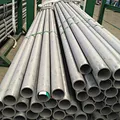 TP314 Seamless Stainless Steel Tube
 TP310H Seamless Stainless Steel Tube
 TP310S Seamless Stainless Steel Tube
 TP310 Seamless Stainless Steel Tube
 TP309 Seamless Stainless Steel Tube
 TP316Ti Seamless Stainless Steel Tube
 TP347H Seamless Stainless Steel Tube
 Monel K500 Seamless Tube
 Seamless Stainless Steel Condenser Tube
 Seamless Stainless Steel Heat Exchanger Tube